
The Work · Long Island
Detail You CanSee Up Close
A caulking job is judged from three feet away. Straight lines, even width, clean terminations, and full contact on both faces of the joint. Here is the standard every Creative Solutions LI job is held to.
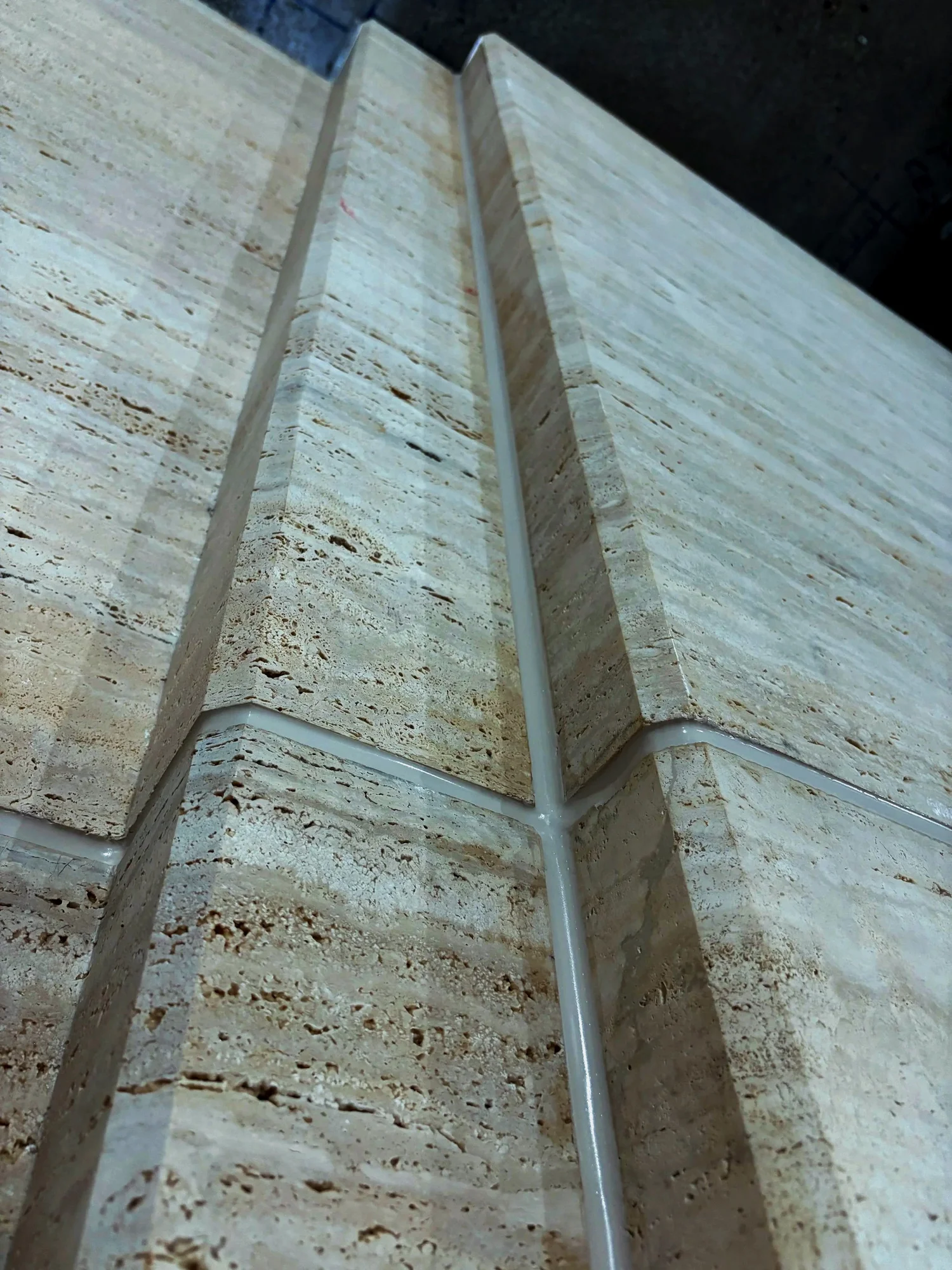
One Joint, Read Three Feet Away
Travertine panels, a vertical joint and a horizontal joint crossing at a single point. That crossing is where sloppy work shows first.
- 01Even bead width the full run, top to bottom. No fat spots, no starved sections.
- 02Tooled to a consistent profile so the joint sheds water instead of holding it.
- 03Clean stone on both sides. No smear, no haze, no residue left in the texture.
- 04The intersection lines up. Two beads meet as one continuous detail.
More details from the work
Clean Lines. Different Surfaces.
A closer look at sealant details across stone, coping, shower edges, and outdoor transitions.
Showing 12 details
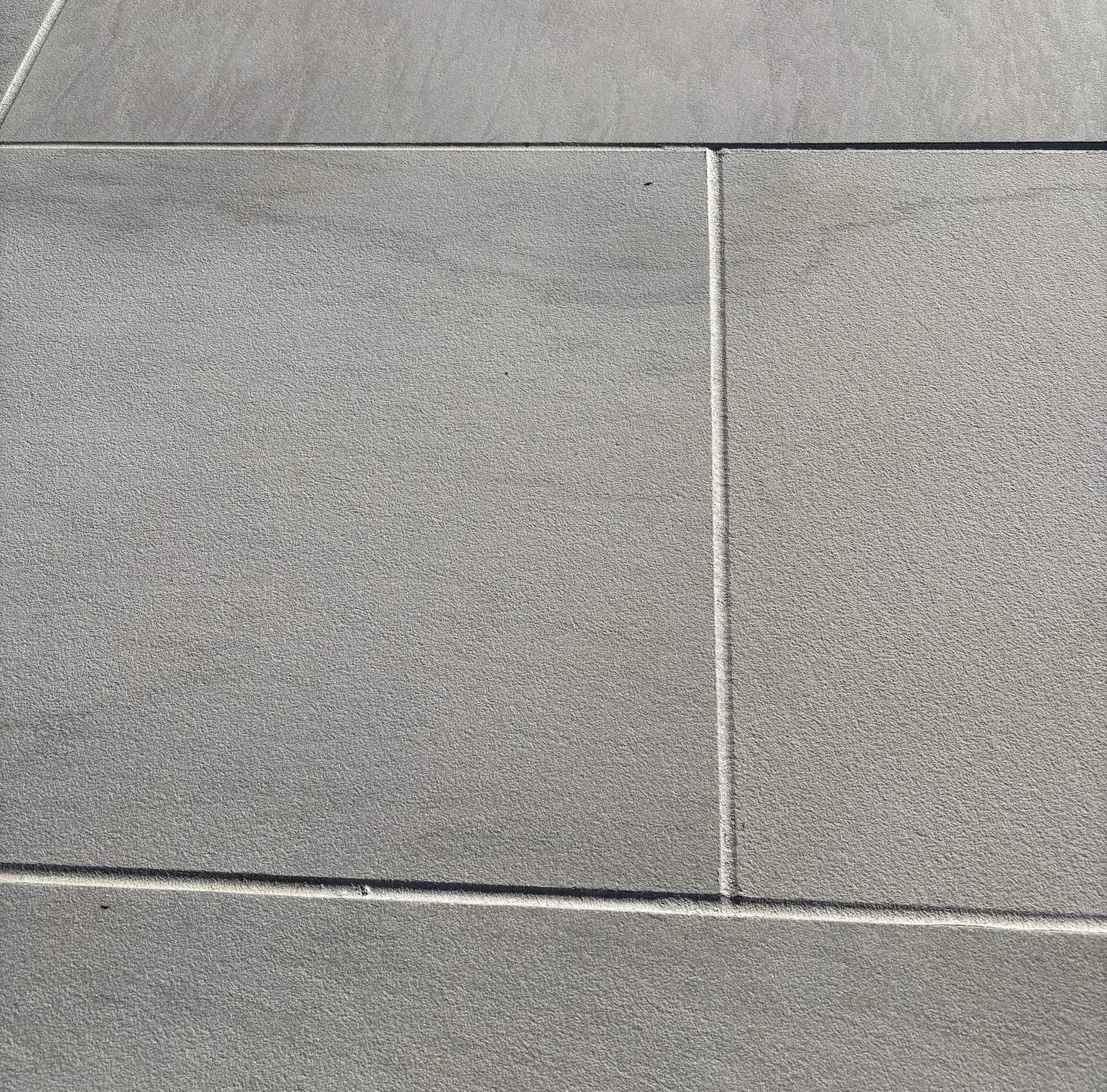
Exterior panel joints
Close view of sealed joints between light-colored exterior panels.
View detail ↗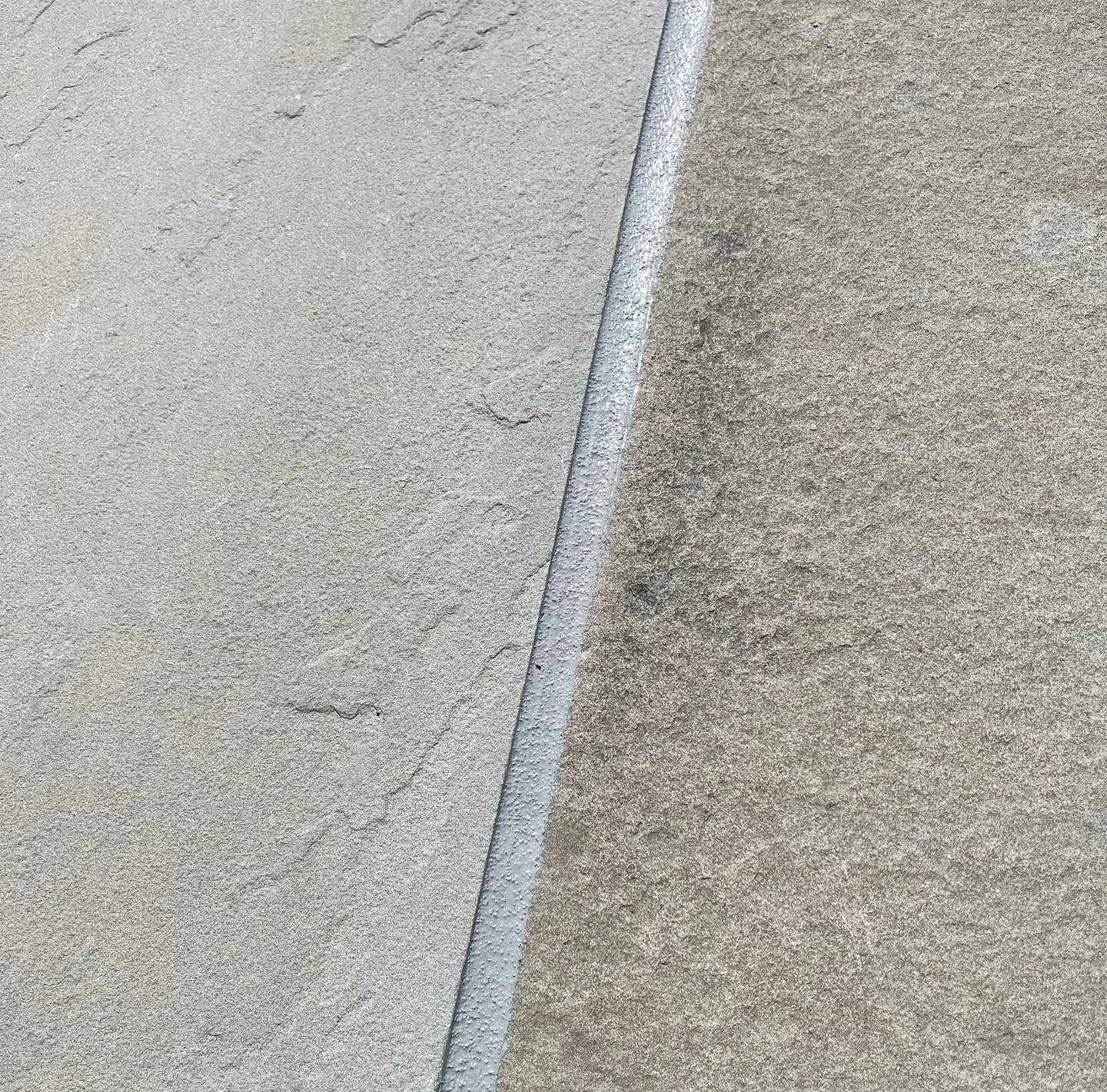
Textured stone joint
Textured gray sealant between two stone surfaces.
View detail ↗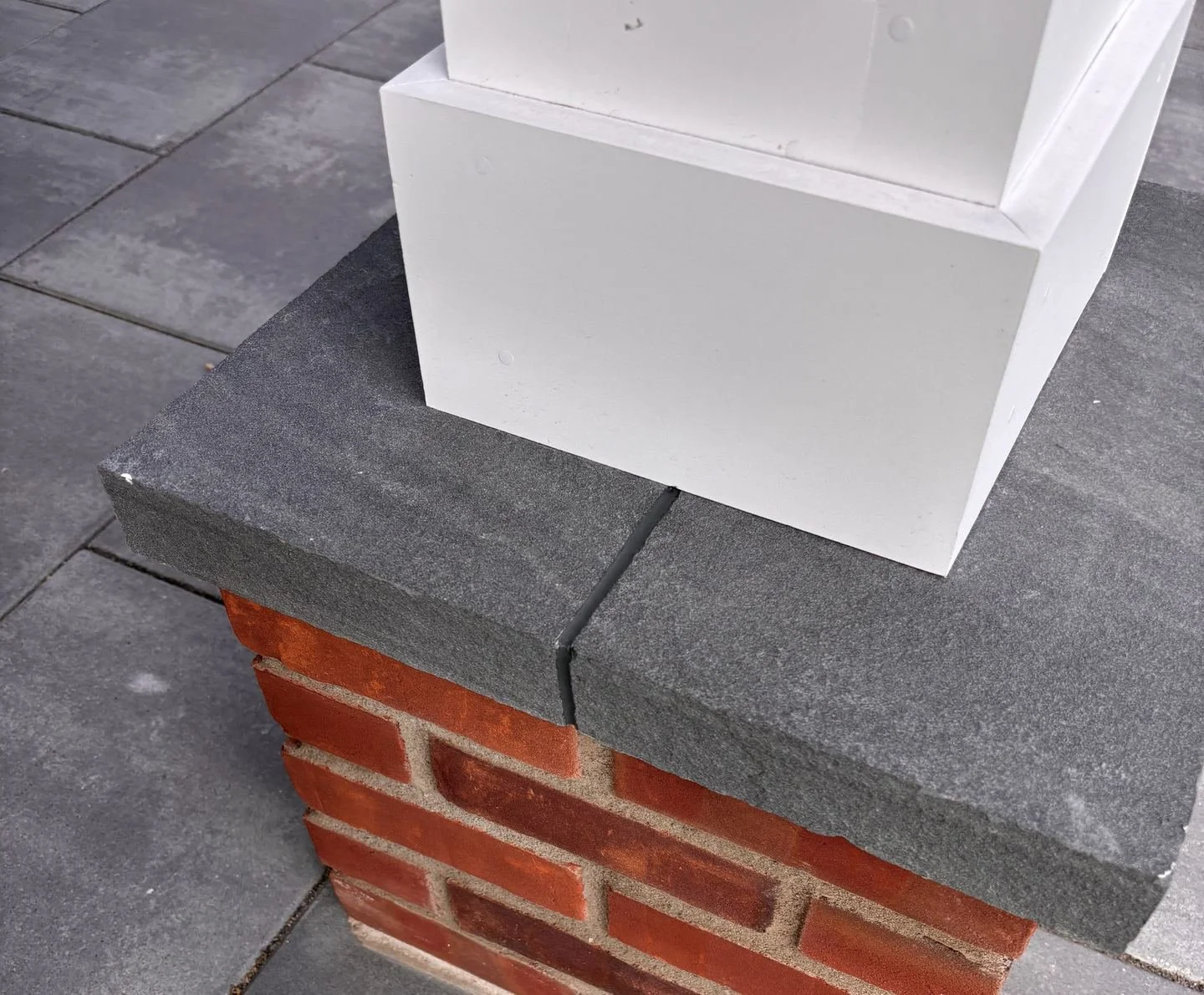
Stone column-cap joint
Dark sealant at the stone-cap joint beside white column trim.
View detail ↗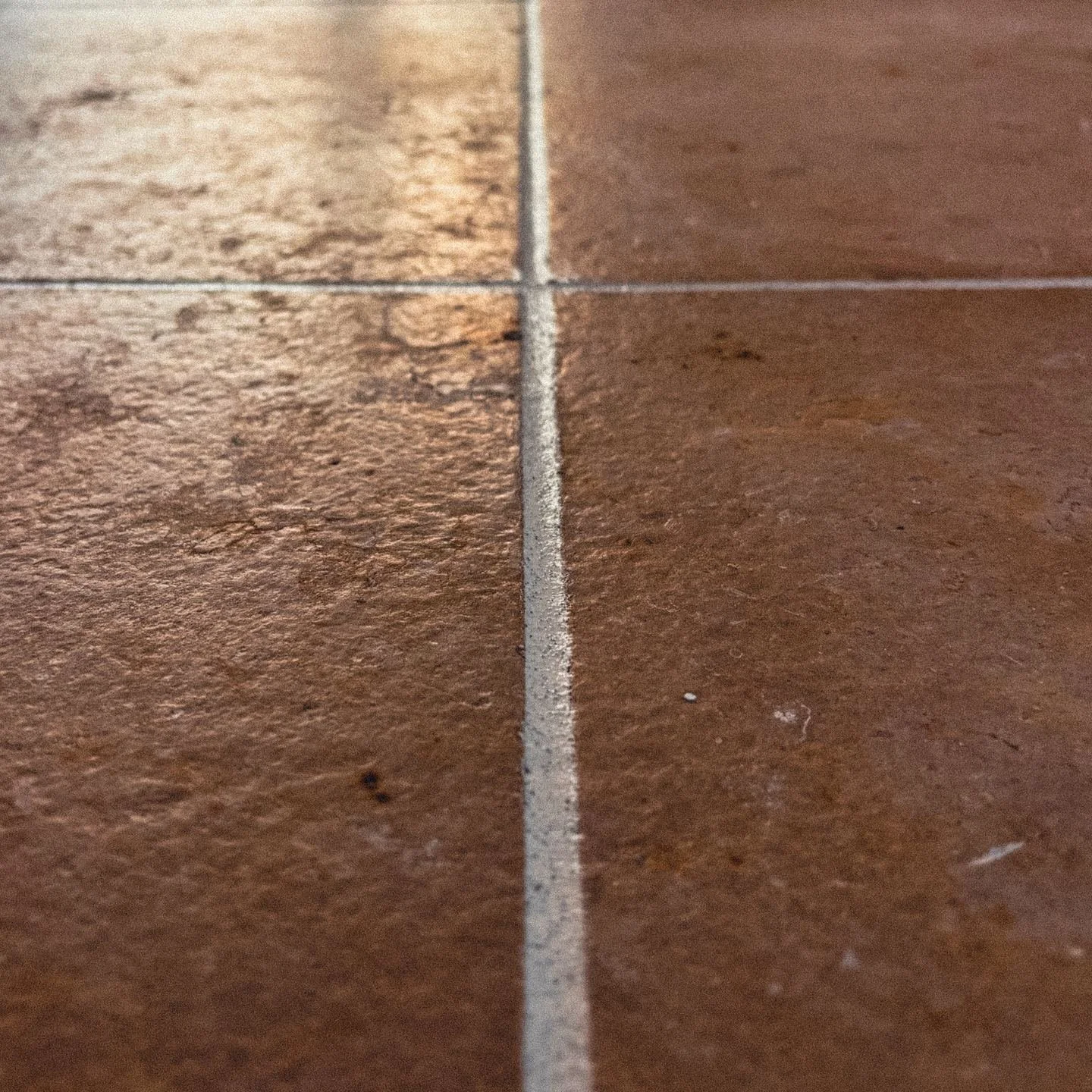
Warm stone textured joint
Textured light sealant crossing between warm-colored stone surfaces.
View detail ↗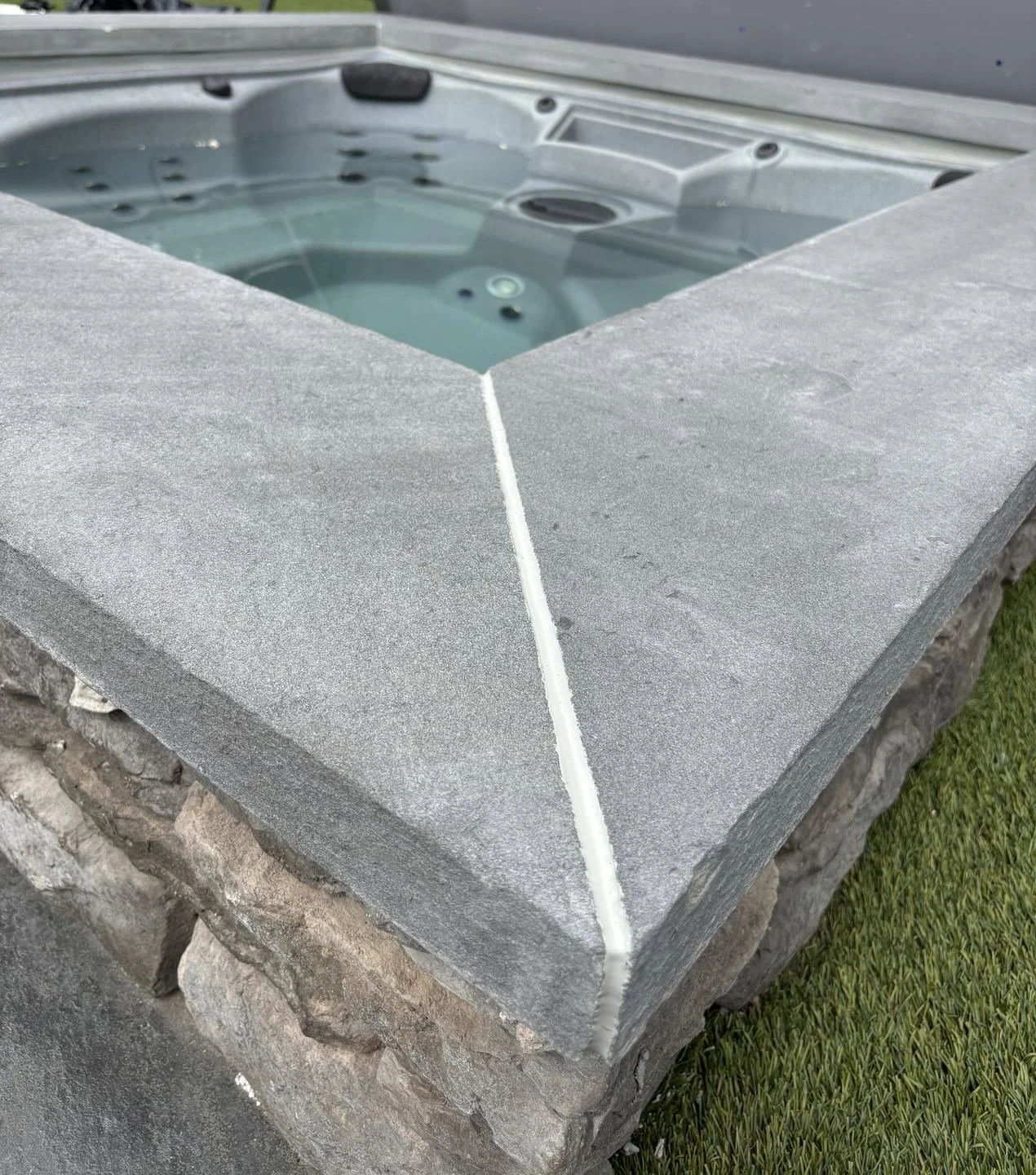
Spa coping corner
Continuous light sealant at a stone spa-coping corner.
View detail ↗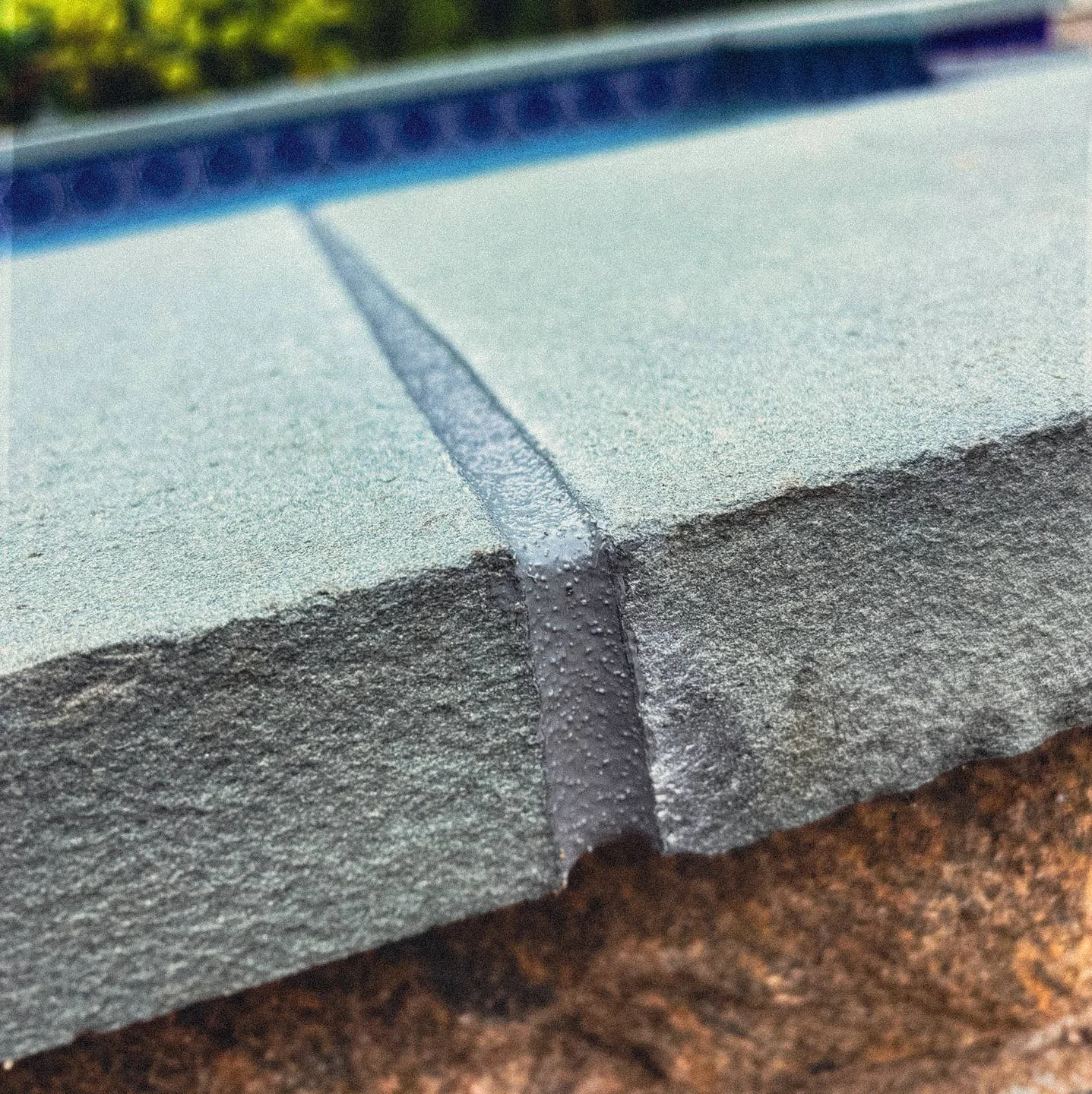
Pool coping sealant detail
Textured gray sealant at a pool-coping edge.
View detail ↗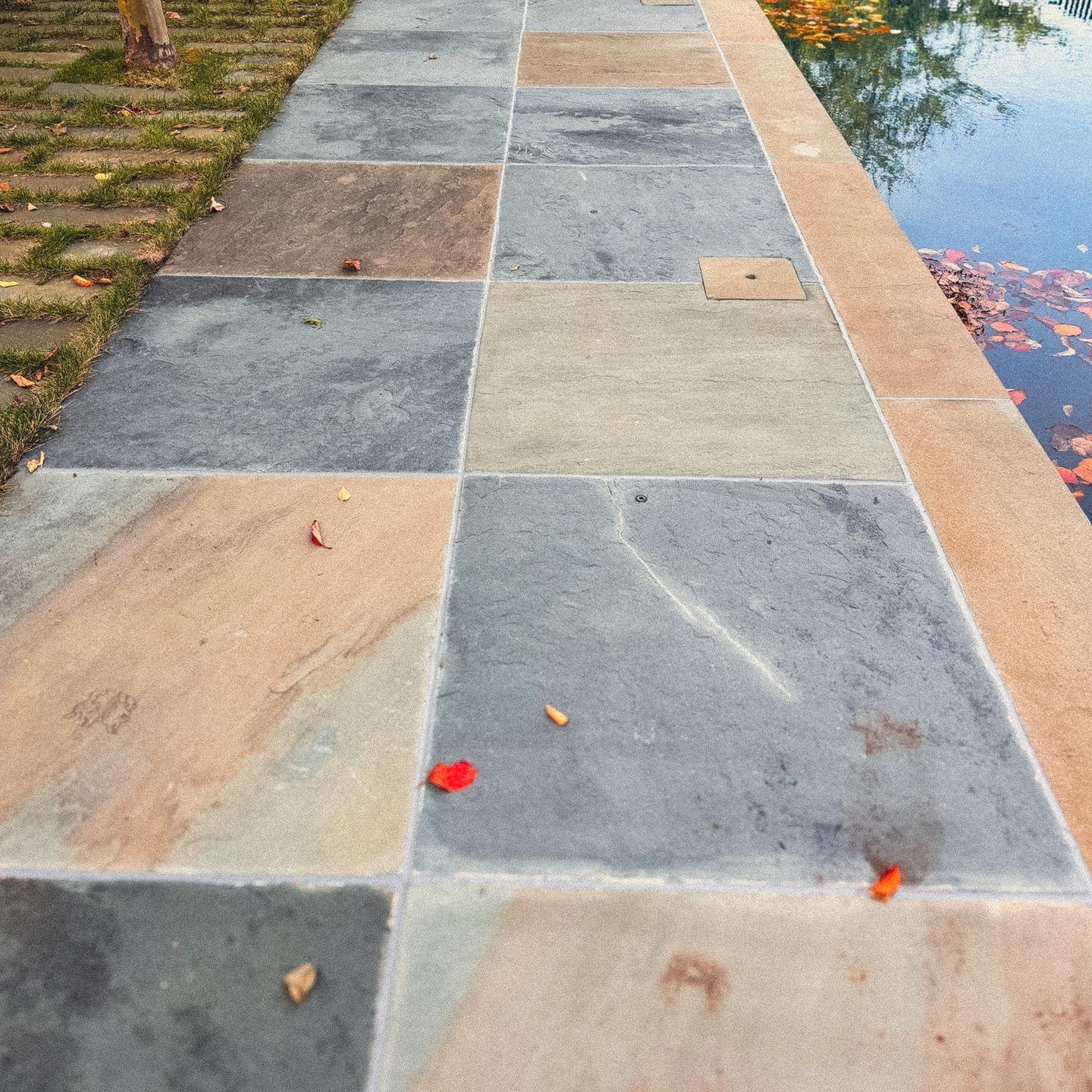
Multicolor pool-edge paving
Joint detail along multicolor stone paving beside a pool.
View detail ↗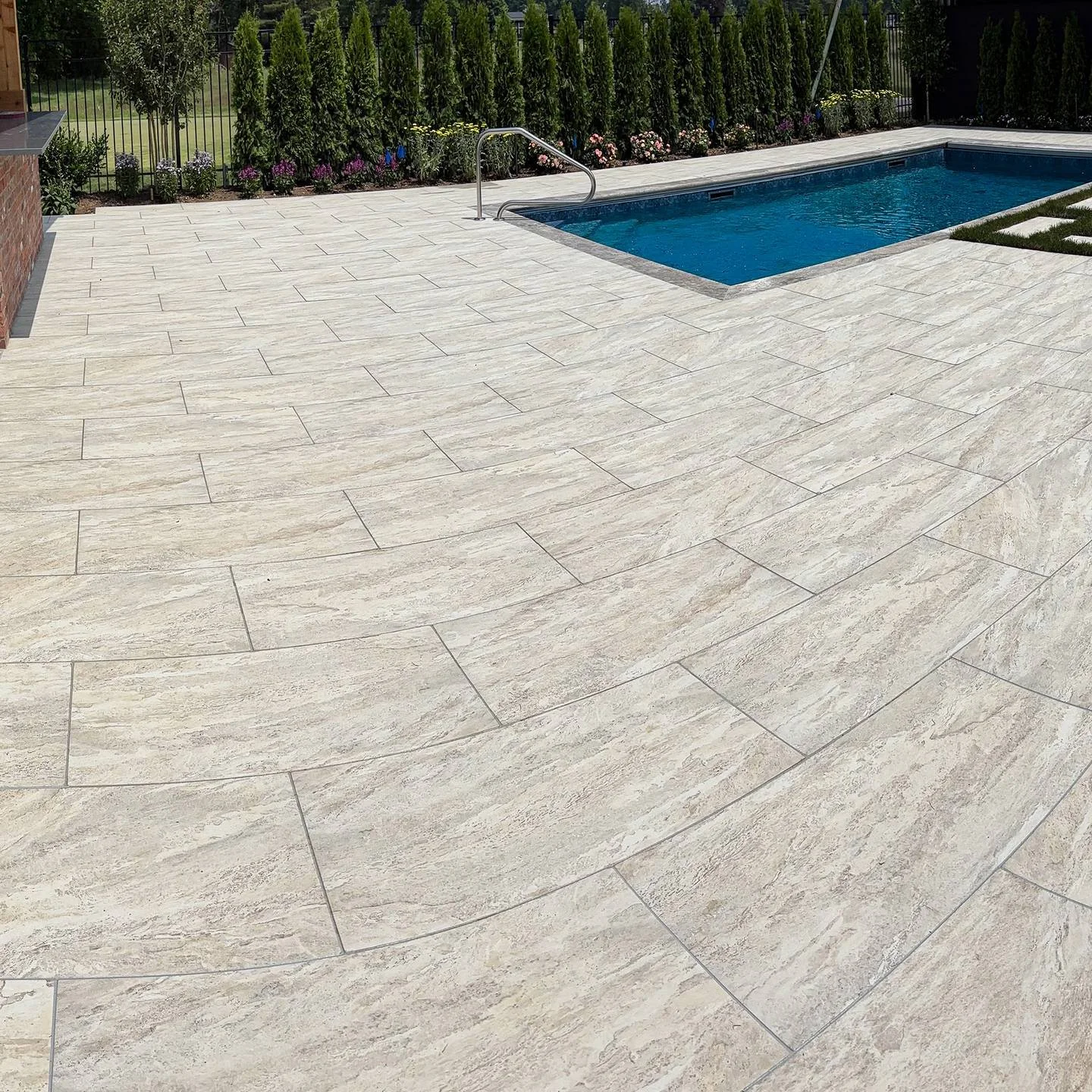
Pool terrace overview
A wider view of the pool terrace and its surface joint layout.
View detail ↗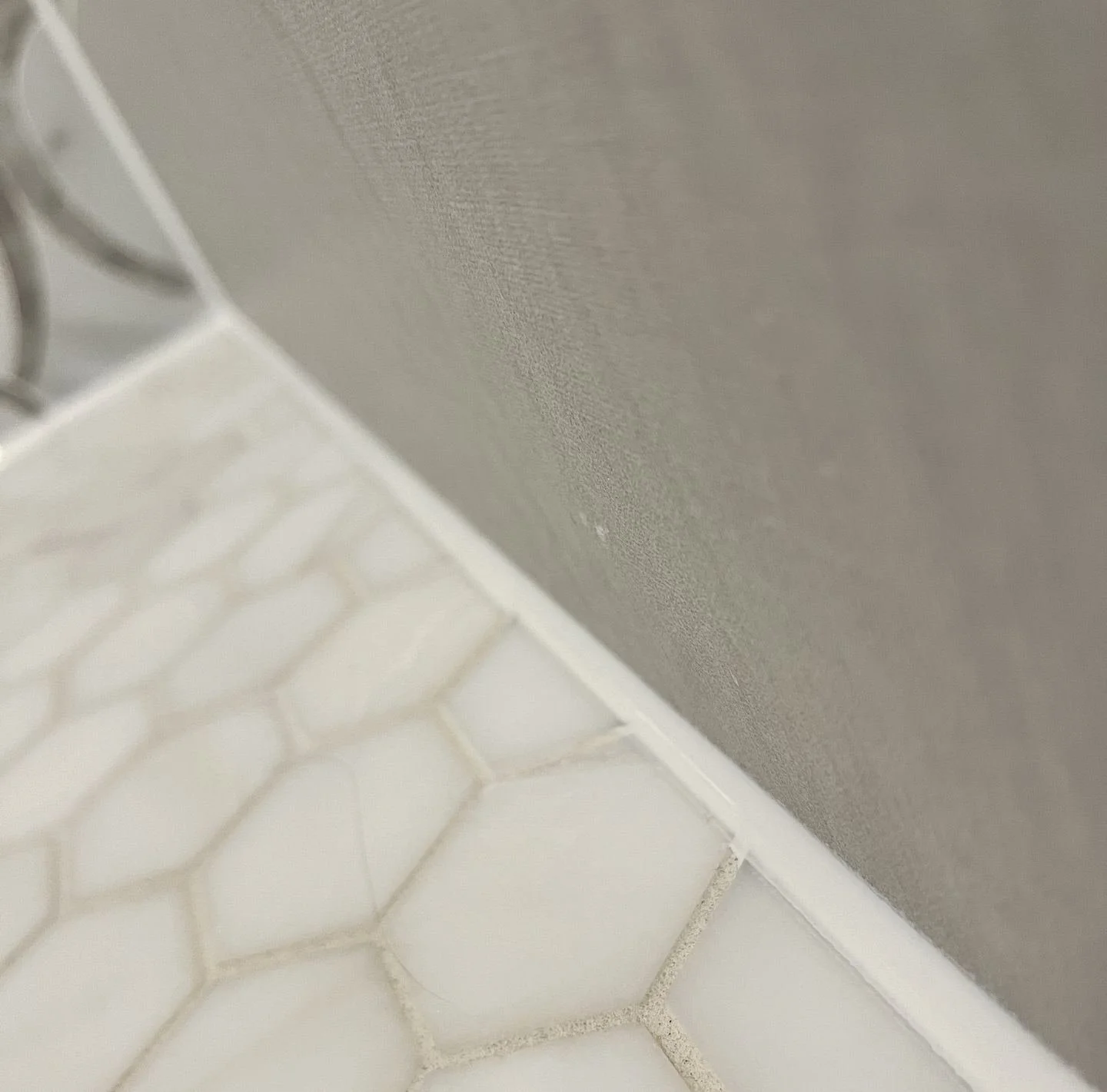
White shower-edge seal
Continuous white sealant at the wall-to-hexagonal-tile junction.
View detail ↗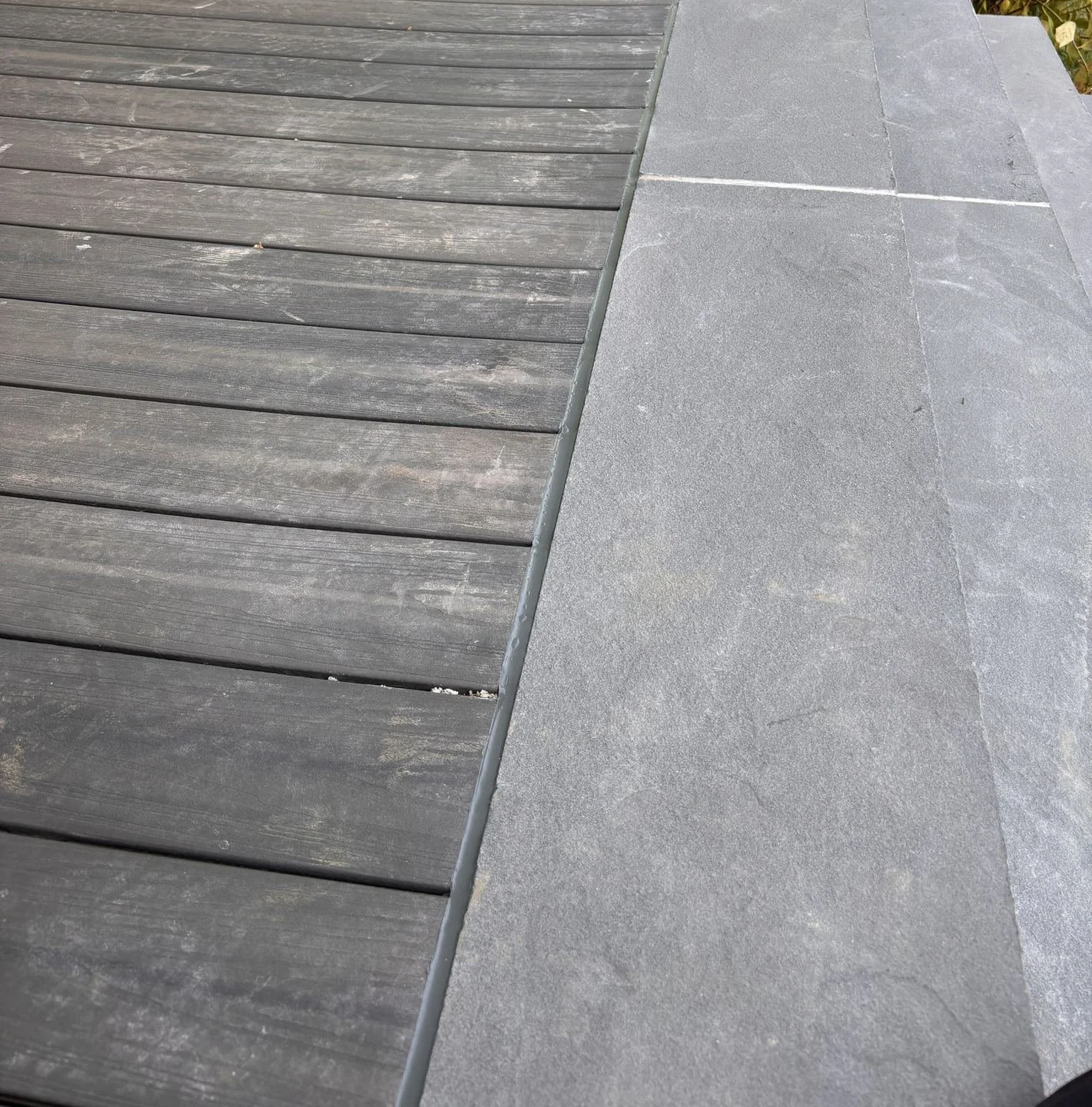
Deck-to-stone transition
Gray sealant along the deck-to-stone transition.
View detail ↗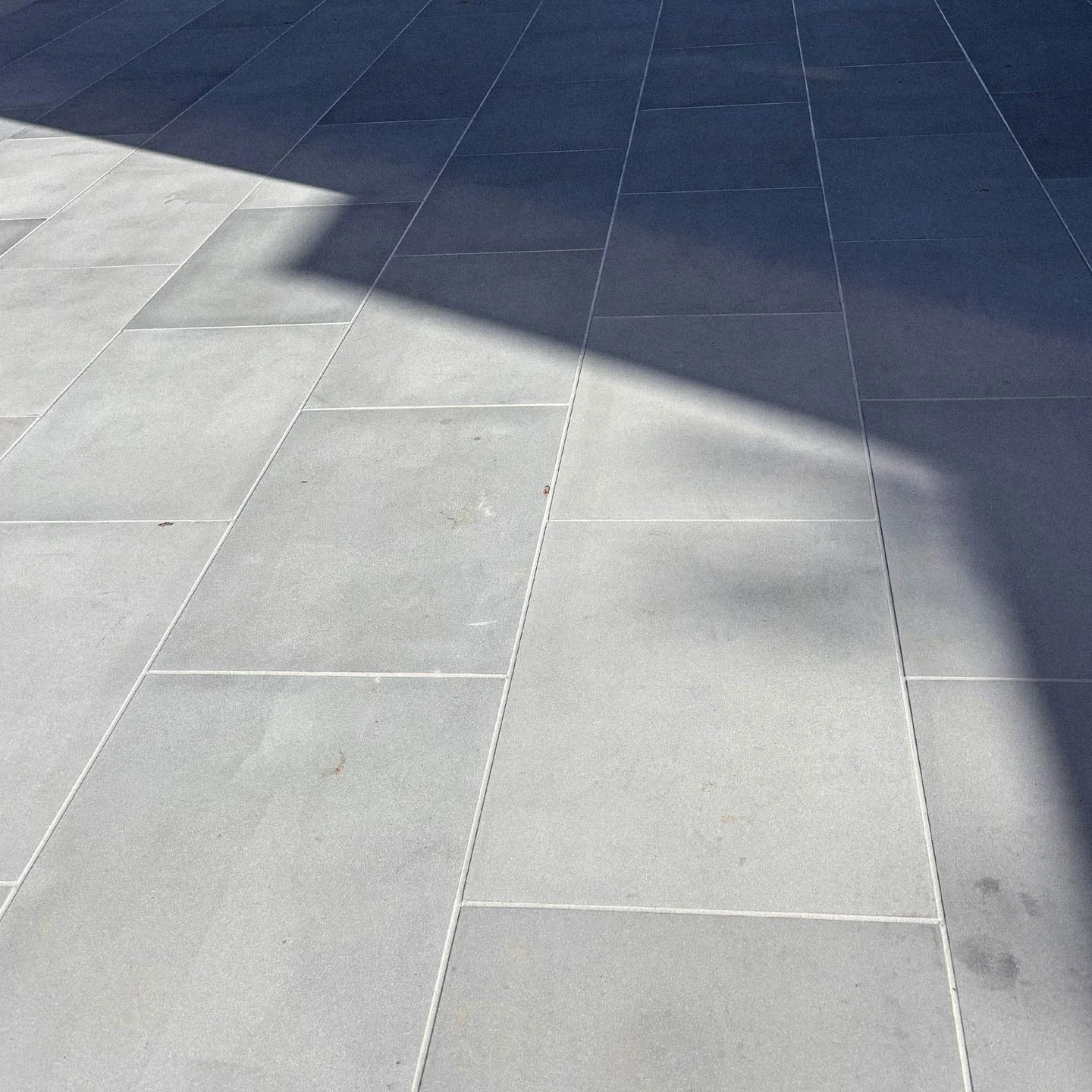
Gray paving joint field
Light joint lines across gray paving, with a diagonal shadow.
View detail ↗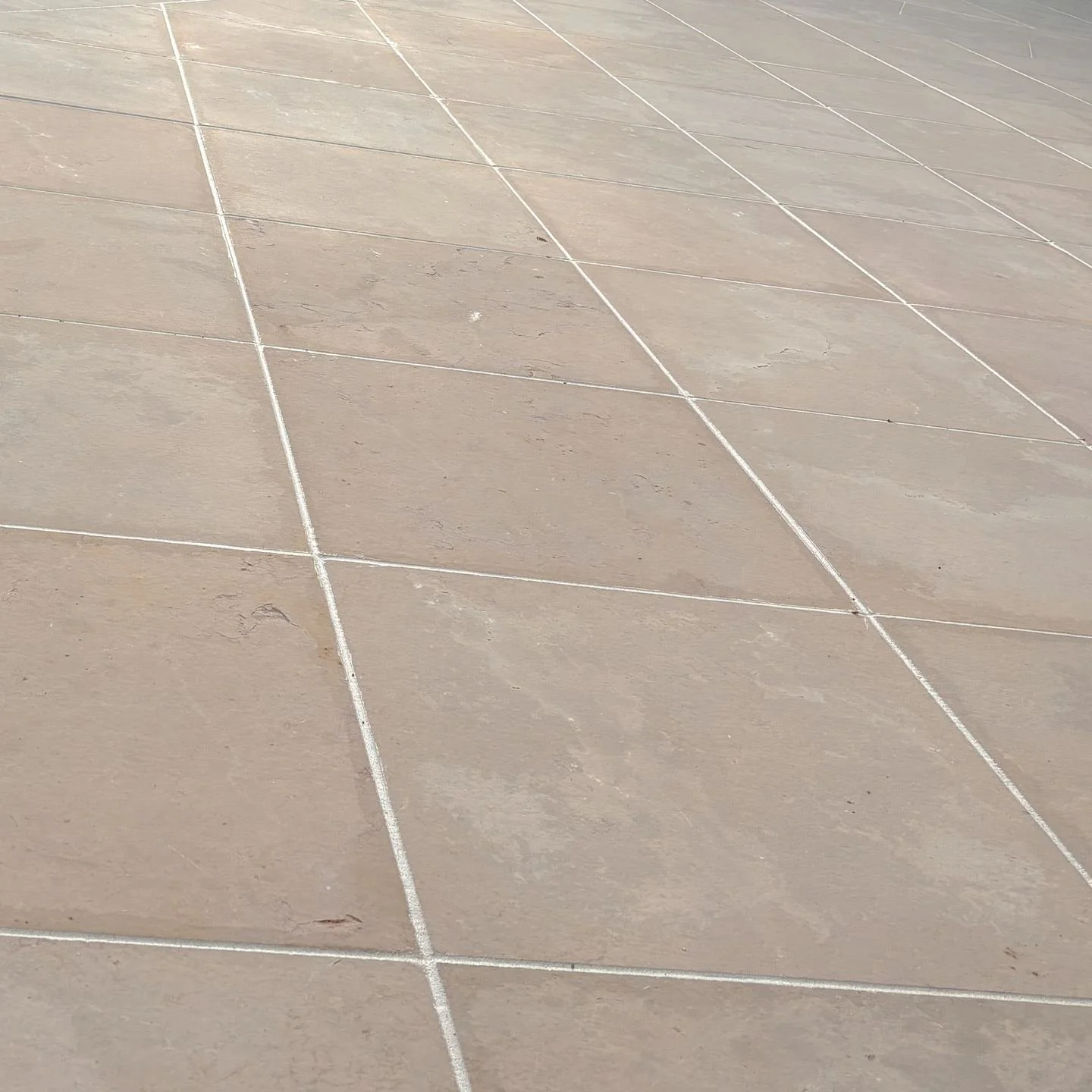
Warm stone paving joints
Light sealant lines across warm-colored stone paving.
View detail ↗What A Good Joint Looks Like
Most caulking failures are prep failures. Sealant is the last four minutes of a job that is mostly cutting, cleaning, drying, and backing. Here is what we check before a bead ever goes in.
Old material out
Failed sealant is cut and pulled, not covered over. New material needs bare substrate to bond to.
Joint clean and dry
Dust, salts, and moisture are what break a bond. The joint gets cleaned and given time to dry.
Right depth, right backing
Backer rod sets the depth so the bead can stretch. Too deep and it tears. Too shallow and it splits.
Product matched to the joint
Stone, tile, metal, and wood all move differently. The sealant is chosen for the substrate and the movement.
More work is being added
New photos go up as jobs wrap. If you want to see something specific before you book, ask and I will send it.
Nassau, Suffolk, and the Hamptons. Residential and commercial.